

Scar Revision Aftercare in Pune: What to Do After Surgery and What to Avoid

Written by DR DC Content Team | Medically Reviewed by Dr. Dhruv Chavan on October 15, 2026
Table Of Content
- The Four Phases of Scar Revision Healing
- Week 1: Wound Care After Scar Revision Surgery
- Weeks 2 to 6: Silicone Therapy and Activity Recovery
- Sun Protection: The Most Critical Long-Term Aftercare Step
- Steroid Injections and Additional In-Clinic Treatments
- Factors That Affect Scar Revision Healing
- What Not to Do After Scar Revision Surgery?
- Urgent-Care Guidance After Scar Revision Surgery
- Aftercare Cost and What Is Included
- Frequently Asked Questions
Scar revision surgery corrects the position, texture, width, or colour of a scar. What happens in the weeks and months after surgery determines how well the new scar heals and how significant the long-term improvement is. Aftercare for scar revision is not optional: it is part of the treatment. Patients who follow the post-operative instructions carefully, protect their healing skin from sun exposure, and attend follow-up appointments consistently get better outcomes than those who do not. This guide explains what aftercare involves, why each instruction matters, and what to watch for at each stage of healing.
Scar revision aftercare in Pune involves wound care and dressing management in the first week, followed by silicone therapy, sun protection, and activity restrictions over 3 to 6 months. The critical factors are keeping the wound clean and undisturbed in the first 10 to 14 days, applying silicone gel or sheets from around week 2, and protecting the healing scar from sun exposure for at least 6 months. Dr. Dhruv Chavan at Dr. DC Plastic Surgery, Pune, provides a personalised aftercare plan at discharge and follows each patient through the healing process at six Pune clinic locations.
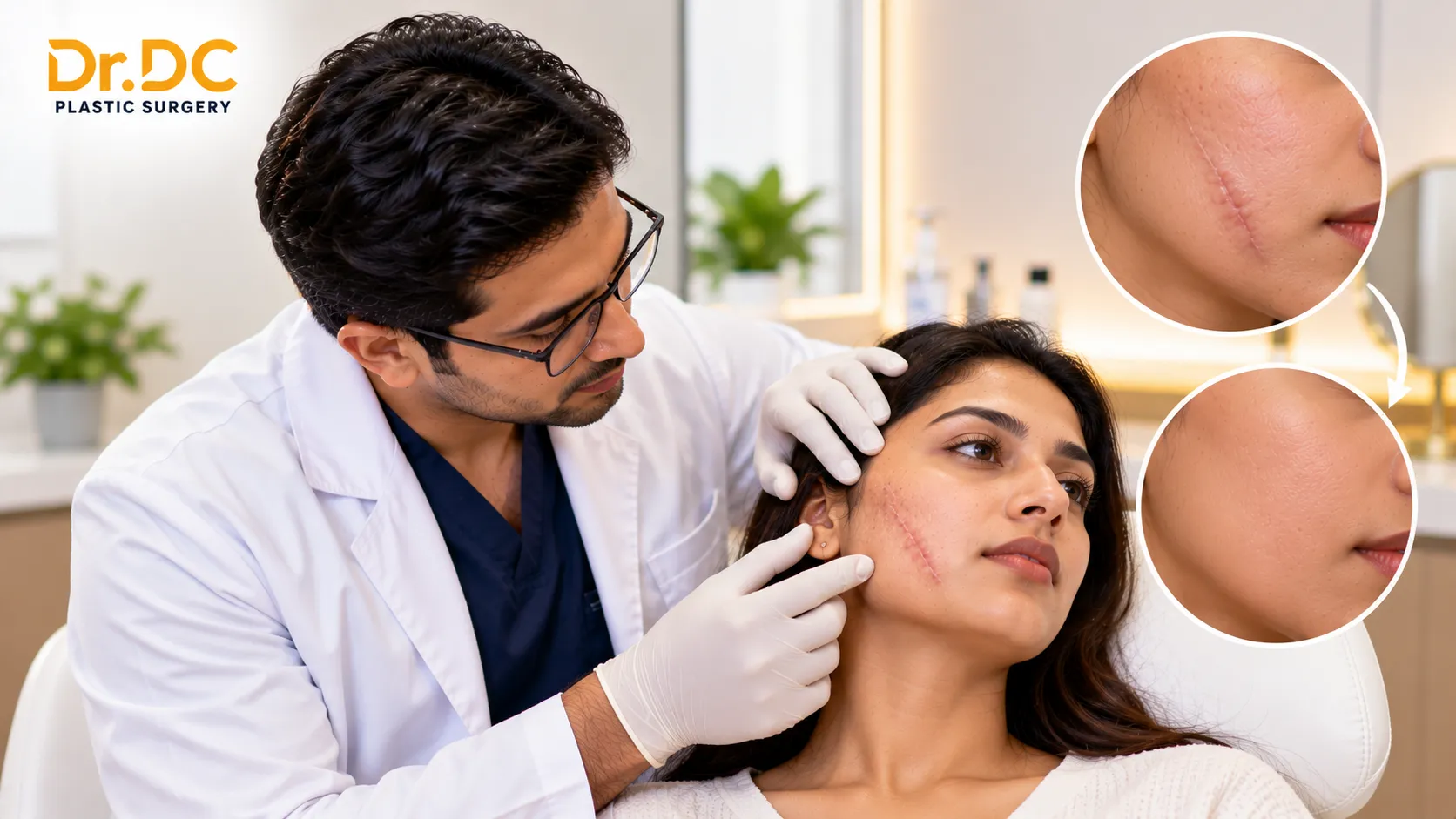
The Four Phases of Scar Revision Healing
Understanding what is happening in the skin at each phase helps patients follow aftercare instructions with the right intent rather than just the right actions.
- Phase 1 (Days 1 to 14): Inflammatory and early repair phase. The wound is fragile. Sutures or steri-strips are in place. The primary goal is to keep the wound clean, avoid tension on the closure, and prevent infection. Swelling and redness are normal at this stage.
- Phase 2 (Weeks 2 to 6): Proliferative phase. The wound is closed but immature scar tissue is forming. Collagen is being deposited rapidly. This is when silicone therapy begins, as silicone modifies collagen production and reduces the risk of hypertrophic scar formation. The scar may appear raised, red, or firm at this stage; this is normal.
- Phase 3 (Months 2 to 6): Remodelling phase. The scar is maturing. Collagen fibres are reorganising. The scar typically softens and fades progressively during this period. Sun protection is critical to prevent pigmentation that would make the scar more visible.
- Phase 4 (Months 6 to 18): Final maturation. The scar continues to mature and fade. The final result of scar revision is assessed at 12 to 18 months, when the scar has fully matured. Continued silicone use and sun protection through this phase protects the outcome.
Week 1: Wound Care After Scar Revision Surgery
The first week after scar revision requires careful attention to the wound. Dr. Dhruv Chavan provides specific instructions at discharge that cover the patient’s procedure and closure type. General principles:
Keeping the wound clean. The wound is cleaned gently with saline or the cleaning solution provided. No scrubbing or rubbing. Cleaning removes crust and debris that accumulate around the suture line and reduces infection risk.
Dressing management. Dressings protect the wound from contamination and help maintain a moist healing environment. Patients are instructed on how often to change dressings and what to apply beneath them. Dressings are not removed until advised unless they become saturated with blood or fall off.
Avoiding tension. The healing wound should not be pulled or stretched. Activities that involve significant arm or neck movement are restricted when the scar is in those areas. Tension on a healing wound encourages wider scarring.
Keeping the area dry. The wound should be kept dry for the first few days after surgery. Showering with the wound covered or avoiding submersion is typically advised for the first 48 to 72 hours.
Avoiding direct sunlight on the wound. Even in the first week, direct sunlight on the healing wound should be prevented. Sun exposure to a fresh wound causes pigmentation that becomes visible once the wound closes.
Weeks 2 to 6: Silicone Therapy and Activity Recovery
Once the wound has closed and any sutures have been removed or have dissolved, the focus shifts to managing the forming scar tissue.
Silicone gel or silicone sheet therapy. Silicone is the most evidence-supported non-surgical intervention for scar prevention and management. Applied over the healed wound once sutures are out, silicone creates an occlusive barrier that modulates the local environment, reduces trans-epidermal water loss from the scar, and modifies the collagen deposition process. This reduces the risk of hypertrophic (raised, firm) scar formation and supports a flatter, softer scar outcome. Dr. Dhruv Chavan advises which silicone product to use, whether a sheet or gel, and how many hours per day to apply it. Silicone is used for a minimum of 2 to 3 months and often longer.
Scar massage. From around 4 to 6 weeks, gentle scar massage using a neutral moisturiser or silicone gel is added to the daily routine. Massage helps soften the scar, reduces firmness, and improves pliability. The technique and pressure to apply are demonstrated at the follow-up appointment.
Progressive return to activity. Light daily activity resumes in the first week for most patients. Return to exercise, heavy lifting, or activities involving the operated area is gradual and follows the specific guidance given based on the scar location and procedure performed.
Avoiding swimming and submersion. Swimming pools, lakes, and the sea are avoided until the wound is fully healed and cleared at a follow-up appointment. Chlorinated and natural water bodies carry infection risk for healing wounds.
Sun Protection: The Most Critical Long-Term Aftercare Step
Sun protection after scar revision is not a minor consideration. It is one of the most important factors in the final appearance of the scar and it is required for at least 6 months after surgery, ideally for 12 months.
Healing scar tissue contains melanocytes that are particularly sensitive to UV radiation. Sun exposure on a maturing scar causes post-inflammatory hyperpigmentation: the scar darkens in response to UV, and this pigmentation can be permanent or very slow to fade. A scar that has healed well structurally can be made permanently more visible by inadequate sun protection during the maturation period.
“Sun protection after scar revision is not optional and it is not just about summer,” says Dr. Dhruv Chavan, plastic surgeon at Dr. DC Plastic Surgery, Pune. “UV exposure on a healing scar, even from incidental sunlight on the commute to work, causes pigmentation that can be difficult to reverse. I tell every scar revision patient that the SPF application is as important as the silicone sheets. Together they are what protect the investment of the surgery.”
Practical steps for sun protection of a healing scar in Pune:
Broad-spectrum SPF 50 sunscreen applied to the scar whenever it is exposed to light, including through a car window and on overcast days. Physical sun protection using clothing, a hat, or a scar-covering dressing outdoors. Avoiding prolonged sun exposure during peak UV hours (10am to 4pm). Indoor scars on the face, neck, or forearms are still exposed during daily activity and need the same SPF routine.
Do You Need a Doctor Consultation
Steroid Injections and Additional In-Clinic Treatments
For patients whose scar shows signs of hypertrophic or thickened healing, Dr. Dhruv Chavan may incorporate intralesional steroid injections into the post-operative management plan. Steroid injections administered into the scar reduce the activity of scar-forming cells (fibroblasts), flatten a thickened scar, and soften firmness. A series of 2 to 4 injections spaced 4 to 6 weeks apart is typical for hypertrophic scarring.
This is not a complication: it is a planned component of comprehensive scar management for patients whose scar type or location makes raised healing more likely. For more on hypertrophic scar management, see the hypertrophic scar treatment guide. For keloid-prone patients, the management approach is more intensive and is described on the keloid treatment page.
Book a Scar Revision Aftercare Appointment in Pune
Dr. Dhruv Chavan, MCh Plastic Surgery, APSI member, follows every scar revision patient through the healing process at Dr. DC Plastic Surgery, Pune. Aftercare appointments are available at six clinic locations.
Book an Appointment | Call +91 99604 341 11 | Scar Revision at Dr. DC Plastic Surgery
Factors That Affect Scar Revision Healing
Results from scar revision depend on anatomy, wound biology, and the patient’s adherence to aftercare. Certain factors affect healing and are assessed before surgery:
Scar location. Scars on the chest, shoulders, and upper back are prone to hypertrophic healing because of the skin tension in those areas. These locations require more intensive silicone and steroid management post-operatively. Facial scars generally heal better because facial skin has a robust blood supply, but they require strict sun protection.
Skin type. Patients with darker skin tones (Fitzpatrick skin types IV to VI, common in the Indian population) have a higher baseline risk of post-inflammatory hyperpigmentation and, in some cases, hypertrophic or keloid scar formation. Aftercare is adjusted accordingly, with increased emphasis on sun protection and earlier initiation of silicone therapy.
Smoking. Smoking impairs wound healing by reducing blood supply to the healing tissue and increasing infection risk. Patients who smoke are advised to stop for at least four weeks before and four weeks after surgery.
Medical conditions. Diabetes and other conditions affecting wound healing are discussed at consultation and managed with appropriate pre-operative planning.
Age. Younger patients tend to produce more collagen during healing and have a higher risk of hypertrophic scar formation than older patients. Silicone therapy and follow-up scheduling account for this.
What Not to Do After Scar Revision Surgery?
“The patients who have the least satisfactory healing are often not the ones with the most difficult scars,” says Dr. Dhruv Chavan, scar revision surgeon at Dr. DC Plastic Surgery, Pune. “They are the patients who stopped the silicone sheets after two weeks because they felt the scar looked fine, or who went on a beach holiday three months post-op without sunscreen. The scar matures over a year, and the aftercare needs to last for most of that period to protect what the surgery achieved.”
Actions that compromise scar revision results include: stopping silicone therapy early because the scar appears to be healing well, skipping follow-up appointments, exposing the healing scar to direct sun without SPF 50 protection, scratching or picking at the healing wound, applying unverified topical products not recommended by the surgical team, returning to strenuous activity before cleared at a follow-up appointment, and smoking during the healing period.
Urgent-Care Guidance After Scar Revision Surgery
Contact the clinic or an emergency service immediately if you experience any of the following after scar revision: fever above 38 degrees Celsius, spreading redness or warmth around the wound extending beyond the wound edges, severe or rapidly worsening swelling, heavy bleeding that does not settle with gentle pressure, wound edges that have reopened or separated, or any chest pain or breathing difficulty. These symptoms require clinical assessment and should never be managed at home without guidance.
Aftercare Cost and What Is Included
| Item | Included / Additional |
| Discharge wound care kit (dressings, cleaning solution) | Included in surgical fee |
| Post-operative follow-up appointments (standard schedule) | Included in surgical fee |
| Steroid injection sessions (if clinically required) | Additional, priced per session |
| Silicone gel or sheet product | Additional, patient-purchased product |
| Laser sessions for scar refinement (if planned) | Additional, priced at consultation |
At Dr. DC Plastic Surgery, the surgical fee for scar revision includes the surgeon fee, facility, anaesthesia, and all standard post-operative appointments. Additional in-clinic treatments such as steroid injections or laser refinement sessions are priced separately and discussed at the point of clinical need, not sold in advance. For the overall cost of scar revision surgery and what to expect, see the scar revision cost guide.
Prices last reviewed: 2026. A personalised cost estimate including any planned post-operative treatments is provided at the treatment pricing page.
Scar Revision Consultations and Aftercare at Six Pune Clinic Locations
Dr. DC Plastic Surgery has six clinic locations: Kharadi, Baner, NIBM, Pimple Saudagar, Prabhat Road, and Pune Station. Patients from Koregaon Park, Wakad, Hadapsar, Aundh, Viman Nagar, and across Pune attend scar revision consultations and aftercare appointments at the clinic most convenient to them. International patients travelling to Pune for scar revision can see the international patients page.
Find Your Nearest Dr. DC Clinic | View Scar Revision Results | Read Patient Reviews
Find Dr. DC Plastic Surgery on Google Maps | Call +91 99604 341 11
We offer a range of cosmetic treatments that help you feel confident again
Book a Scar Revision Consultation or Aftercare Appointment in Pune
At Dr. DC Plastic Surgery, Dr. Dhruv Chavan, MCh Plastic Surgery, APSI member, plastic surgeon in Pune, manages every scar revision patient through the full healing process: from the initial assessment and surgical planning to the final result review at 12 to 18 months. For more on the care approach, see the process and approach and about us .
Call +91 99604 341 11 to book at any of six Pune clinic locations.
Frequently Asked Questions
How long does scar revision aftercare last?
Active aftercare after scar revision continues for 6 to 12 months from the date of surgery. The most intensive phase is the first 6 weeks, covering wound care, dressing management, and early silicone therapy. From 6 weeks onward, the daily aftercare routine consists of silicone application, scar massage, and sun protection, all of which continue through the scar maturation period. Follow-up appointments are scheduled at intervals through the first 6 months, with a final review at 12 to 18 months when the scar has fully matured and the result of the surgery can be properly assessed.
When can I apply silicone after scar revision?
Silicone therapy begins once the wound has fully closed and the sutures have been removed or have dissolved, typically around 10 to 14 days after surgery. Dr. Dhruv Chavan advises the exact start date at the first post-operative follow-up appointment, as it depends on the wound closure and healing progress. Starting silicone too early, before the wound is fully closed, is not recommended and can irritate the wound. Starting too late means missing the early proliferative phase when silicone is most effective at modifying scar tissue formation.
Will my scar look worse before it looks better?
It is normal for a scar to appear raised, red, or firm in the first 4 to 8 weeks after scar revision surgery. This is the proliferative phase of healing, when collagen is being deposited rapidly and the scar tissue is immature. Most patients see the scar begin to soften and fade from 2 to 4 months onward. The final appearance is assessed at 12 to 18 months. Patients who understand this timeline approach the healing process with more realistic expectations and are less likely to discontinue aftercare during the phase when the scar looks most prominent.
Can I go to the gym after scar revision?
Return to exercise after scar revision depends on the location of the scar and the nature of the activity. Light walking is generally appropriate within a few days. Activities that cause significant sweating, friction over the wound, or tension on the healing scar are restricted for 4 to 6 weeks. Heavy weight training or contact sports may require a longer restriction period. The specific timeline is confirmed at the follow-up appointment based on how the wound is healing. Resuming exercise too early risks wound dehiscence (wound edges separating) or hypertrophic scar formation from excessive tension on the immature tissue.
What are the signs of poor healing after scar revision that I should report?
Signs that warrant contacting the clinic include: spreading redness around the wound extending beyond the wound edges, increasing warmth or pain at the wound site, discharge that is green, yellow, or has a foul odour, wound edges that have separated or gapped, fever, and any firm raised ridge developing along the wound line in the first few weeks that is increasing in size. Early identification of these findings allows prompt management before they affect the final result. For more on what scar outcomes look like and how different scar types are managed, see the complete scar revision guide and the guide to removing old scars in Pune.
We offer a range of cosmetic treatments that help you feel confident again
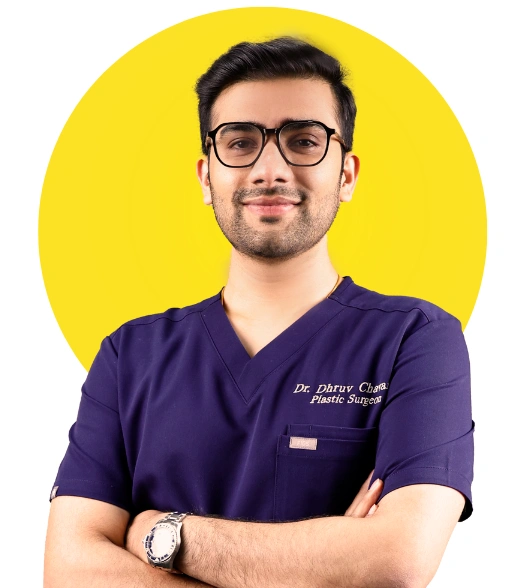
Dr Dhruv Chavan, MBBS, MCh

Further Reading
Gynecomastia Surgery Scarring: What to Expect and How to Minimise It?
Learn what gynecomastia surgery scars look like, how long they take to fade, and how silicone gel and proper aftercare help minimise scarring.
Blepharoplasty Risks and Complications in Pune: What to Know Before Surgery
Blepharoplasty risks in Pune: dry eye, lagophthalmos, haematoma, ectropion, and scleral show explained by MCh plastic surgeon Dr. Dhruv Chavan. What is normal and what needs attention.
Non-Surgical Rhinoplasty (Nose Filler) in Pune
Nose filler in Pune: understand benefits, limitations, risks, cost and results. Dr. Dhruv Chavan explains when filler or surgical rhinoplasty may suit you.
OUR PROCESS
360 Holistic Approach
We take care of everything; before, during, and after your procedure. From consultations to recovery, we focus on precision and care. Result? We deliver a wonderful experience and the best results.

Thorough Evaluation & Consultation

Realistic Goal Setting

Procedure
Planning

Post-Op
Care
We listen, assess, and plan every step to match your goals. Advanced techniques deliver natural results, while dedicated post-op care supports healing and long-term success. Your safety, comfort, and confidence guide every decision, so you always feel informed, supported, and in expert hands.